
How Panic Exit Devices Save Lives: Safety Standards for Public Buildings
- Home
- How Panic Exit Devices Save Lives: Safety Standards for Public Buildings

ahram_sg
On February 10, 2026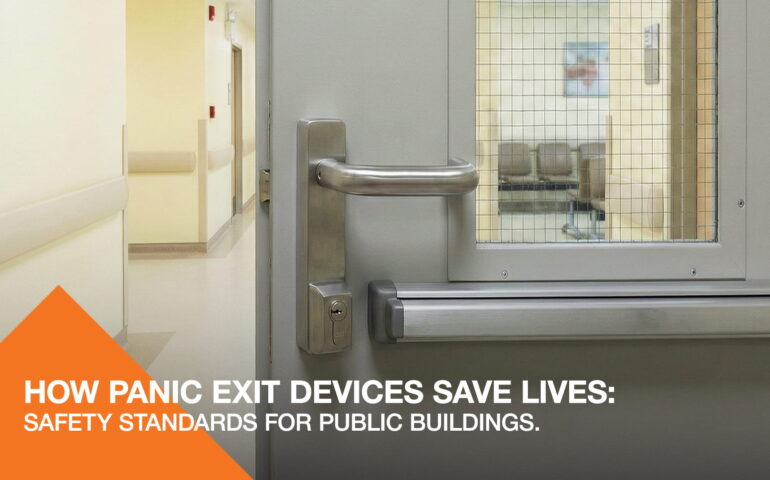
In an emergency, every second matters. When panic spreads through a crowded space, whether it’s a mall, school, cinema, hospital, or stadium, people don’t stop to look for keys or read instructions. They push toward the exit. That’s exactly why panic exit devices exist. They are not a design upgrade or a “nice-to-have”. They are a life-safety requirement in public buildings, and a critical part of fire and evacuation compliance in Egypt.
What Is a Panic Exit Device?
A panic exit device (often called a panic bar or crash bar) is a horizontal bar installed on an escape door that opens the door immediately when pushed, without the need for keys, twisting, or fine motor skills. In simple terms: Push the bar. The door opens.
This design is critical during:
- Fires
- Power failures
- Crowd surges
- Smoke-filled environments
- Situations involving children, elderly users, or people with disabilities
Why Panic Exit Devices Save Lives
In real emergencies, human behavior changes. People panic, push instinctively, lose coordination, and move in groups, not individually. Traditional handles, knobs, or key-operated locks fail under these conditions.
Panic exit devices succeed because they:
- Require no instructions
- Work with body weight, not hand strength
- Allow simultaneous use by multiple people
- Open even if visibility is poor
This is why safety codes worldwide require panic hardware on escape doors in public buildings.
Where Panic Exit Devices Are Required
In Egypt, panic exit devices are typically specified for:
- Shopping malls and retail centers
- Cinemas and theaters
- Schools and universities
- Hospitals and clinics
- Hotels (public and back-of-house exits)
- Office buildings with public access
- Factories and industrial facilities
Key Safety Standards You Must Know
EN 1125: Panic Exit Devices for Public Use
The most important standard for panic hardware is EN 1125.
This standard applies to:
- Buildings used by the general public
- Doors where occupants are not familiar with the building
- Situations where panic is likely
EN 1125 tests and regulates:
- Opening force under panic pressure
- Durability (high cycle testing)
- Fire door compatibility
- Corrosion resistance
- Reliability under load
If a door serves the public and is part of an escape route, EN 1125-compliant panic exit devices are usually mandatory.
EN 179: Emergency Exit Devices (Controlled Use)
For comparison, EN 179 applies to non-public buildings where occupants are familiar with exits (e.g., staff-only areas).
Panic Exit Devices & Fire Doors: A Critical Relationship
A panic exit device is often installed on a fire-rated door, which means:
- The panic hardware must be fire tested
- It must work with fire-rated locks, hinges, and door closers
- The door must self-close and latch correctly
A panic bar that opens perfectly, but compromises the fire door’s integrity, is not compliant.
This is why architects and contractors should think in terms of complete fire door assemblies, not individual components.
Design & Accessibility Considerations
Panic exit devices are also essential for inclusive design.
They support:
- Wheelchair users
- Children
- Elderly occupants
- People with reduced hand strength
Because the activation is horizontal, intuitive, and low-force, they align well with accessibility and universal design principles, while still meeting fire and safety regulations.
Common Specification Mistakes to Avoid
Even experienced project teams make mistakes with panic hardware. Watch out for these:
- Installing standard handles on escape routes
- Using EN 179 hardware where EN 1125 is required
- Mixing uncertified panic bars with fire doors
- Ignoring corrosion resistance in coastal or industrial areas
- Treating panic exit devices as standalone items
Each of these can lead to:
- Failed inspections
- Civil defense rejection
- Legal liability
- Life safety risks
Why System-Based Specification Matters
The strongest compliance strategy is specifying panic exit devices as part of a complete system, including:
- Panic exit device (EN 1125)
- Fire-rated door leaf and frame
- Fire-rated hinges
- Fire-rated door closer
- Approved locking and latching components
This is where working with an established manufacturer becomes critical.
Panic Exit Devices by Ahram Security Group
Ahram Security Group (ASG) offers a full range of panic exit devices designed for public buildings, engineered to meet international safety standards and local project requirements.
ASG panic exit devices are:
- EN 1125 compliant
- Suitable for fire-rated door assemblies
- Designed for high-traffic, high-risk environments
- Compatible with ASG door closers, locks, and hinges
- Tested for durability and reliability in real-world conditions
This makes them ideal for projects where life safety, compliance, and long-term performance are non-negotiable.
When you’re designing or constructing public buildings in Egypt, panic exit devices are not optional; they are a core life-safety responsibility.
Explore Ahram Security Group’s panic exit devices and get expert support for compliant, safe escape routes, because in an emergency, the right hardware doesn’t just meet the code;
it gives people a way out.